|
SOA delivery projects contain stages found in traditional IT projects such as Service Design, Implementation and Testing, but also introduce new processes and stages, such as Service Inventory Analysis and Service Discovery within an Enterprise or Domain Service Inventory. Service Orientation [MSOAM] is a prescriptive vendor independent methodology for (a) delivering services as enterprise assets in a service inventory and (b) developing and governing the service inventory architecture in the enterprise, or in a set of domains of the enterprise. Item (b) corresponds to Enterprise Architecture. The Open Group Architecture Framework (TOGAF) is a popular, vendor independent, generic Enterprise Architecture Framework, for developing architectures to meet different business needs. It is developed and evolved by members of The Open Group Architecture Forum. TOGAF is descriptive but not prescriptive, and can be tailored to be used together with other architecture and project frameworks and methods. TOGAF 9 extends previous versions of TOGAF dramatically, but for the purposes of this document we concentrate in the support for SOA as an Architecture Style. TOGAF 9 provides a set of Guidelines on how to use a subset set of TOGAF Phases, Inputs and Outputs in SOA Projects and the benefits gained by doing this...
[view]
|

|
Microsoft Corp. (MSFT), one of the world's largest technology companies, sells personal computing devices, cloud systems and services, software, and other products. With products targeting both consumers and businesses, Microsoft competes for one against companies such as Apple, Inc. (AAPL), Amazon.com Inc. (AMZN), International Business Machines Corp. (IBM), and Oracle Corp. (ORCL)....
[view]
|

|
by Prasad Jayakumar
World-renowned SOA expert Thomas Erl had stated the following on Service Reusability, "A service capability can be reused in two different ways. It can be repeatedly invoked by the same service consumer program automating the same business task or it can be invoked by different service consumers automating different business tasks ". Based on this thought, services are generally classified into Shared Services and Internal Services. Shared Services [Multiple-Purpose Programs] are true enterprise resources with agnostic functional contexts. They cater to larger group of service consumers. Examples are services which are defined at Enterprise level or Inter-portfolio level. Internal Services [Single-Purpose Programs] have specific functional context. They serve with limited scope to a known service consumer. Examples are services which are limited to Intra-application or Inter-applications within a portfolio. SOA governance board should identify the category to which service/service candidate belongs. There are many instances where a service candidate is identified by a business unit for a specific requirement. This service is termed as internal service, but the scope could be broader. Once a service is properly tagged, the governance board should evaluate shared services as well as internal services. If the board doesn't do so, the pitfall of the existing service will not be known until a problem occurs. This would then leads to a delay while they amend the existing service (non-backward compatible changes) or totally create a new service altogether. Both of these results completely defeat the purpose of the SOA service...
[view]
|

|
Businesses and other organizations ready to move to virtualized infrastructure would cover the work with an IT consultancy to help them budget for the virtualization process. Contrary to popular belief, moving to virtualization involves the three types of costs that are often associated with IT projects: hardware, software, and labor. What your business needs to know about virtualization costs: ....
[view]
|

|
by Jose Luiz Berg
As previously stated, the data model in EAI deserves a separate chapter. A common mistake in systems integration is to transfer their job is requirements as the systems communicate. It is common to hear from integration teams, "they are only the pipe, and don't care about what's going on inside it". In fact, the integration concerns the exchange of information (represented by your data) between systems. This is your goal and that is what adds value to the business. This is only possible through communication, but if the information exchanged are incorrect, or simply arrive at the wrong time, they will be worth nothing to your business. Therefore, an old diskette sent by regular mail with the correct information recorded and delivered at the right time is worth more than the most complex Web service, running at best SOA suite on the market, but that has the wrong information. Defining the format and content of the data bus is important because handling this data is the objective of any integration. However, defining a data model for the bus is a difficult task because they should be attached to the definition that each entity has to business processes. To create this model, we must first understand and document the business process, which is a time-consuming and complex task involving interactions with the various areas of the company. This also implies that the areas need to be familiar with their business processes, which unfortunately is not usual. Moving forward, this bus data model will be named ...
[view]
|

|
The financial industry is not opposed to the growing popularity of cloud computing. Larger financial institutions have seen cloud technology positively impact some of their sectors, such as insurance and banking. They may not be yelling from the rooftops, but they agree that the cloud phenomenon has helped them simplify their operations and work more efficiently....
[view]
|
|
 |
 I'm very pleased to announce that we'll be making as series of papers available that explore how the service-orientation paradigm relates to other established models, methodologies, and paradigms. This body of work will provide concrete mapping of principles, characteristics, and mechanisms between service-orientation and the service-oriented architectural model and elements of other models and frameworks, such as those provided by RUP, TOGAF, ITIL, and others. These papers are official supplements of SOA School courses, but will also be published via the SOA Magazine and other publications, including the upcoming serviceorientation.com community site that is under development. In this issue we kick things off with contributions from Filippos Santas, Prasad Jayakumar, and Jose Luiz Berg. I met with both Filippos and Jose at last month's SOA + Cloud Symposium in Brasilia, where we were able to further discuss plans for the roll-out of these important documents. The Brazil event was highly successful with our largest turnout so far. We'll be looking forward to the next symposium in Spring, 2012.
|
|

|
 |
 SOA in Healthcare Conference
OMG and Health Level Seven International (HL7) have announced the 5th Annual SOA in Healthcare Conference: "SOA Road-map to Integration: Architecting Interoperability in Healthcare" is happening on July 13-15, 2011 in Herndon, VA, USA.
[learn more]
SOA in Healthcare Conference
OMG and Health Level Seven International (HL7) have announced the 5th Annual SOA in Healthcare Conference: "SOA Road-map to Integration: Architecting Interoperability in Healthcare" is happening on July 13-15, 2011 in Herndon, VA, USA.
[learn more]
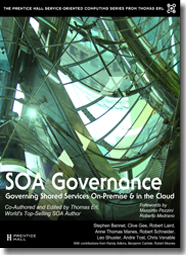 New Book Release:
"SOA Governance:
New Book Release:
"SOA Governance:
Governing Shared Services
On-Premise & in the Cloud"
This book has just been launched at the International SOA & Cloud Symposium in Brazil. This is the latest book in the Prentice Hall Service Oriented Computing Series. This book will provide comprehensive yet understandable and actionable guidelines for governing shared services on premise and in the cloud.
[learn more]
CloudSchool.com
Cloud Certified Professional (CCP)
Training and Certification Program
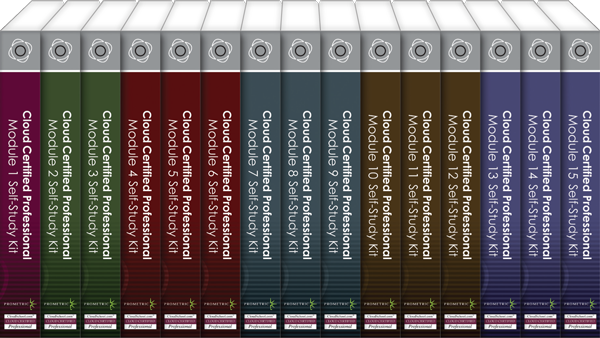 The Cloud Certified Professional (CCP) program is dedicated to excellence in the fields of cloud computing technology, architecture, security, and governance. A collection of courses establish a set of vendor-neutral industry certifications for different areas of specialization. Because of the vendor-neutral focus of the course materials, the skills acquired by attaining CloudSchool.com certifications are applicable to any vendor or cloud platform.
[learn more]
The Cloud Certified Professional (CCP) program is dedicated to excellence in the fields of cloud computing technology, architecture, security, and governance. A collection of courses establish a set of vendor-neutral industry certifications for different areas of specialization. Because of the vendor-neutral focus of the course materials, the skills acquired by attaining CloudSchool.com certifications are applicable to any vendor or cloud platform.
[learn more]
Upcoming SOA Workshops
Certified SOA Governance Specialist
May 25 - 27, 2011
Las Vegas, Nevada
[learn more] [register]
|
Certified SOA Consultant
June 6 - 10, 2011
Lima, Peru
[learn more] [register]
|
Certified SOA Architect
May 23 - 27, 2011
Stockholm, Sweden
[learn more] [register]
|
Certified SOA Governance Specialist
June 13 - 15, 2011
San Diego, California
[learn more] [register]
|
Certified SOA Consultant
May 30 - June 3, 2011
Buenos Aires, Argentina
[learn more] [register]
|
Certified SOA Consultant
June 20 - 24, 2011
Madrid, Spain
[learn more] [register]
|
To view the most current calendar of public SOA Certified Professional workshops, visit www.soaworkshop.com
|
|
|
 |
|
|
|